distilled into one desktop app.
KeenForge lets domain experts annotate a niche dataset and walk away with a trained vision model — no code, no cloud, no ML background. When your dataset is finished, your model is trained.
Foundation models can't label what they've never seen
GPT-4V scores 22% on industrial defect detection. The factory needs 98%+.
This is not a tuning problem — it is structural. General and world models are trained on the common world: people, cars, animals, everyday objects. A hairline crease on a steel strip, a rare cell morphology, a specific crop blight, a particular security anomaly — those are out-of-distribution, and the model's recall collapses exactly where the stakes are highest.
So experts still have to annotate. A QC engineer, a radiologist, an agronomist — they can tell a defect from a shadow in a fraction of a second. What they could not do was turn that judgement into a working model, because that required writing code and training neural networks.
KeenForge closes that gap. The expert keeps doing what only they can do — judging the images. The tool does everything an image-algorithm engineer would normally do around them.
SAI: AI Must Embrace Specialization via Superhuman Adaptable Intelligence — Goldfeder, Wyder, LeCun & Shwartz-Ziv (2025) — argues the future of AI is not one general model, but thousands of specialised superhuman systems. That is the thesis KeenForge is built on.
KeenForge — the algorithm engineer, distilled
Not a labelling tool. A distilled AI vision engineer. Open the desktop app, import your images, draw a handful of boxes — and the model trains in the background while you keep working. Everything runs on your own machine. Your data never leaves it.
~15 imgs
Training
next batch
Corrects
Iterates
Deploy
Green = handled by KeenForge | White = the expert's judgement
An image-algorithm engineer's job is a long chain: clean the dataset, choose the model, tune the hyper-parameters, find the edge cases, deploy the export. KeenForge is that chain, automated around a human who only has to look at pictures and say "yes" or "no".
Why "let the big model label it" fails on niche data
Niche data is slow and expensive.
Unreliable exactly where it matters.
The model learns your expertise — then does the work.
A general model will never become an expert in your domain by itself — your defect, your tissue, your crop exists in the long tail it was never trained on. But a model can learn it from a surprisingly small number of expert-corrected examples. That is what the loop exploits: your corrections are the training signal, and the model's own mistakes are what tells it where to look next.
Built for the people who own the judgement
- Quality & manufacturing engineers — steel, PCB, casting, textile, welding. Surface defects that no general detector has ever seen enough of.
- Clinicians & pathologists — cell morphology, histology, radiology. Rare presentations, high cost of a wrong label.
- Agronomists & ecologists — crop disease, pests, species monitoring. Long-tail classes, very few public images.
- Security & safety teams — domain-specific anomalies, PPE compliance, site-specific risks.
We also curate public niche datasets
Public niche datasets are often large but noisy: loose boxes, missed objects, mislabels, duplicated images, class names that don't even match. Training on them caps your ceiling before you start.
We take these datasets, re-annotate and clean them with KeenForge, document every change, and publish them openly — so anyone can start from a clean baseline instead of re-discovering the same defects. So far: steel-surface defects, blood-cell microscopy and wildlife.
Every release ships with full provenance, a correction report and its upstream citation — and if you spot a bad box, tell us and we will fix it.
Who we are
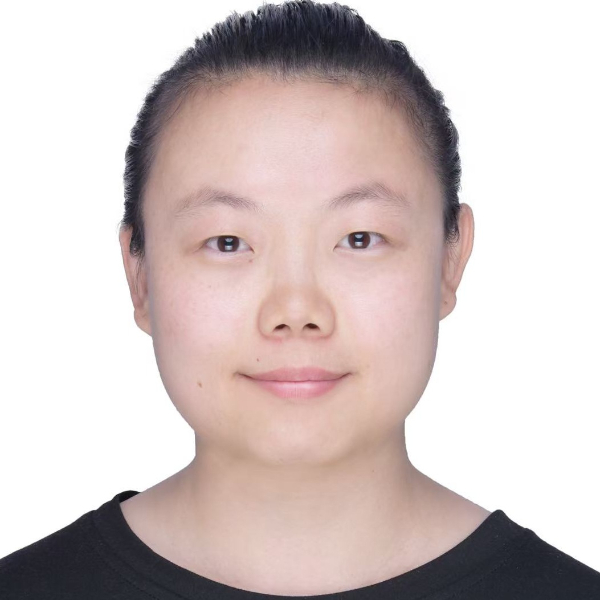
Lu Gan
Nature Portfolio first author. Trained as a clinical physiotherapist, self-taught into AI — and lived the problem first-hand: "I had the domain expertise, but I couldn't train a model." Now building the tool that removes that barrier for every other expert.
Publication
"A Curated and Re-annotated Peripheral Blood Cell Dataset Integrating Four Public Resources"
First Author — curated the dataset, led the annotation strategy, and drove the research from clinical insight to publication. The corrected dataset is published as TXL-PBC-corrected.